Moody Blue Bedroom Ideas: Deep Colors for a Calm, Dramatic Retreat
There's a reason deep blue walls keep showing up in bedroom inspiration photos. If you've been scrolling for moody blue bedroom ideas, you already know the effect you're after. Deep navy, slate, and ink blues create a room that feels calm, private, and quietly dramatic.
The challenge is making it look intentional, not cave-like.
In our research, we dug into paint undertones, Light Reflectance Values (LRV), and layered lighting strategies. Manufacturer specifications indicate that most moody blues have an LRV between 3 and 12, which means they absorb far more light than they reflect. That's the secret to the cozy effect.
It's also why shade selection and lighting matter more than any other decision.
Quick Answer
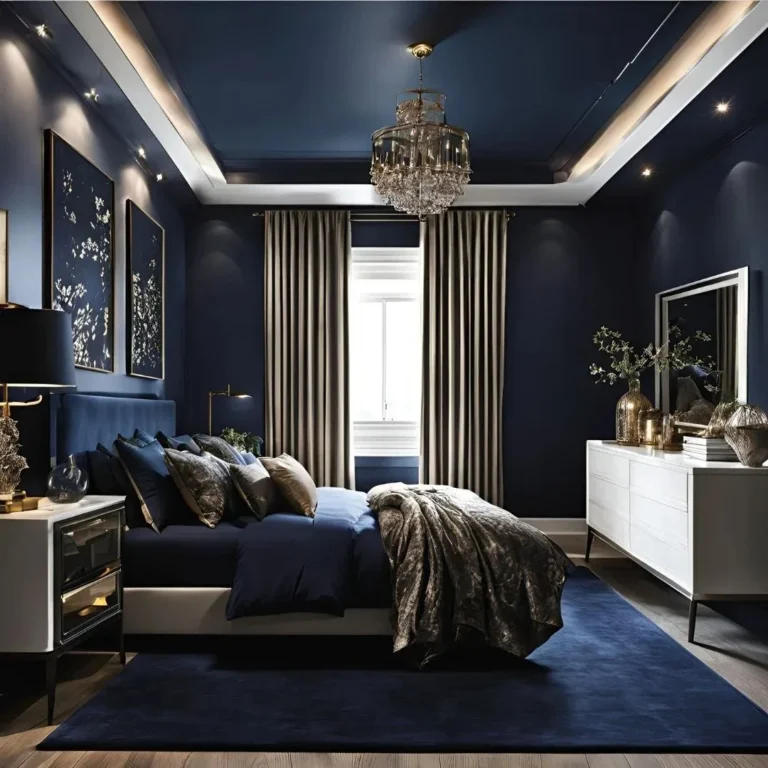
The best moody blue bedroom ideas start with a deep blue paint on the walls. Pair it with warm lighting, natural textures, and brass or wood accents. Color drenching works well in small rooms.
An accent wall suits larger, brighter spaces. Always test swatches before committing.
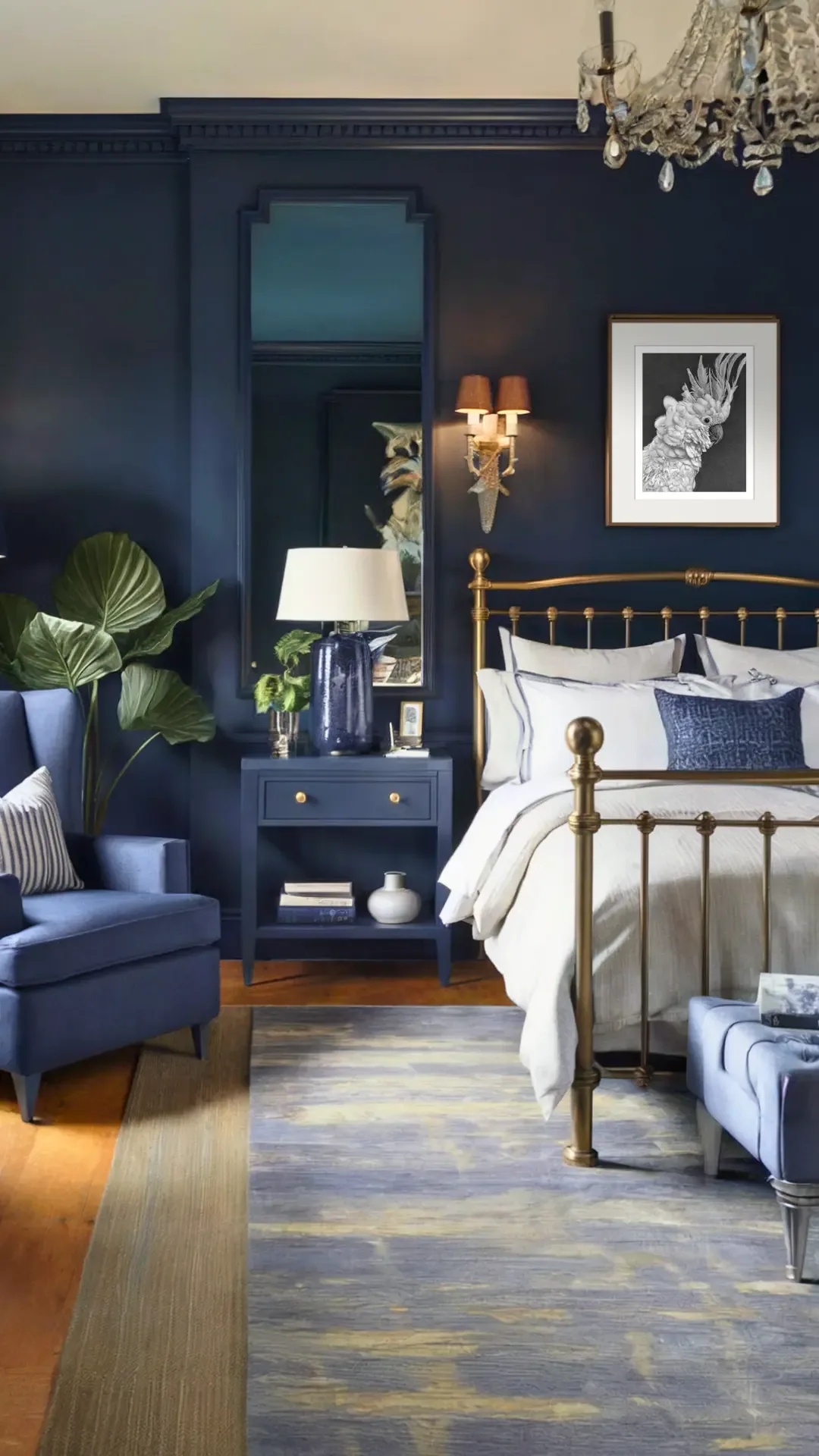
Image source: Web (Bing) / wildlifeartstore.com (Web image (fair-use with source credit))
Why Moody Blue Works: The Look and the Feeling
Moody blue isn't just a color trend. It's a mood-shifter. Dark blue surrounds you in a way that lighter shades simply can't.
It lowers visual noise and makes a bedroom feel like a retreat from the rest of your day.
Psychologically, blue is linked to calm and rest. Add depth, and you get a room that feels secure rather than sterile. Think of it like a weighted blanket for your eyes.
That's why so many sleep-focused bedroom styling guides point toward darker palettes.
This approach works especially well in bedrooms that already get limited natural light. Instead of fighting the dimness, you lean into it. If you're exploring other bold directions, our bedroom styling inspiration section has more starting points for a full room reset.
How to Choose the Right Shade: Undertones, LRV, and Swatches
The paint color you pick makes or breaks the entire look. But two different navy blues can look wildly different on your wall. That's where undertones and LRV come in.
Undertone is the subtle color hiding beneath the blue. It can pull green, purple, gray, or even black. The same blue will look different next to white trim, warm wood, or gray carpet.
So you need to see it in your own room before you paint the whole space.
LRV, or Light Reflectance Value, tells you how much light a paint color reflects. Lower numbers mean darker, more absorbing colors. Most moody blues land somewhere between 3 and 12.
For comparison, a standard white paint sits around 85. Once you understand that, you'll know why a dark navy wall drinks up the afternoon sun.
Navy, Teal, and Slate: What You're Actually Looking At
Navy is the classic choice. It's deep, slightly cool, and reads as almost neutral in the right light. Teal brings a green undertone that feels richer and more coastal.
Slate blue leans gray, giving you drama without the heaviness.
Here's the quick breakdown:
- Choose navy if you want a traditional, grounded look.
- Choose teal if you want warmth and a touch of the ocean.
- Choose slate if you want something soft and less intense.
- Choose ink blue if you want nearly-black drama.
When you test samples, apply them directly to your wall. Paint two coats on a large piece of foam board first. Then hold it against your wall and check it at different times of day.
Manufacturer color libraries, like the one at Benjamin Moore, publish LRV data for every shade, which helps narrow your list before you ever open a can.
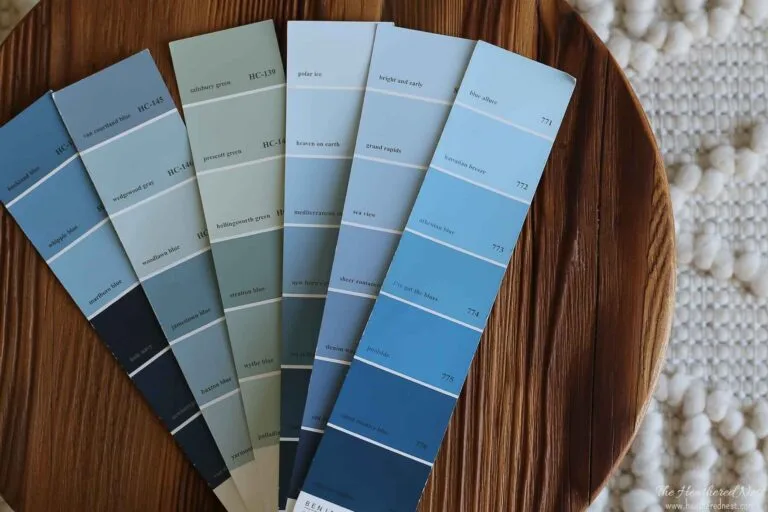
Image source: Bing (Web (fair-use with source credit))
Understanding LRV and How Light Changes the Wall
Your room's orientation matters more than you'd think. A north-facing room gets cool, diffuse light. Dark blue can look flat and grayer here.
South-facing rooms pull warm afternoon light, which can make a navy wall feel richer and more saturated.
East-facing rooms are bright in the morning and dim by evening. West-facing rooms get the opposite pattern. That's why swatches are non-negotiable.
A shade that looks perfect at noon might feel completely different under your nightstand lamp.
One practical rule: if your room gets almost no natural light, push toward the deeper end of the spectrum. The darkness becomes intentional. If your room is bright, you can go slightly lighter because the light will fill it back in.
Color Drenching vs. Accent Walls: Two Completely Different Looks
There are two main ways to bring moody blue into a bedroom. One covers everything. The other commits to just one wall.
Both look great, but they serve different purposes.
Color drenching means painting the walls, ceiling, and trim all the same shade. It's a bold move that creates a fully immersive space. Because the eye doesn't stop at a visual line, the room feels taller and more wrapped-in.
This works especially well in small bedrooms where you want to blur the edges.
An accent wall, on the other hand, keeps the rest of the room lighter. It's a lower-commitment option that still delivers plenty of mood. Use it behind the headboard to anchor the bed, or on the wall across from the window to catch a bit of natural light.
For our full take on painting the ceiling as part of a dark palette, these ceiling treatment ideas cover when to coordinate and when to contrast. Just remember: whites and off-whites on trim create a crisp, classic contrast. Same-color trim makes everything feel softer and more enveloping.
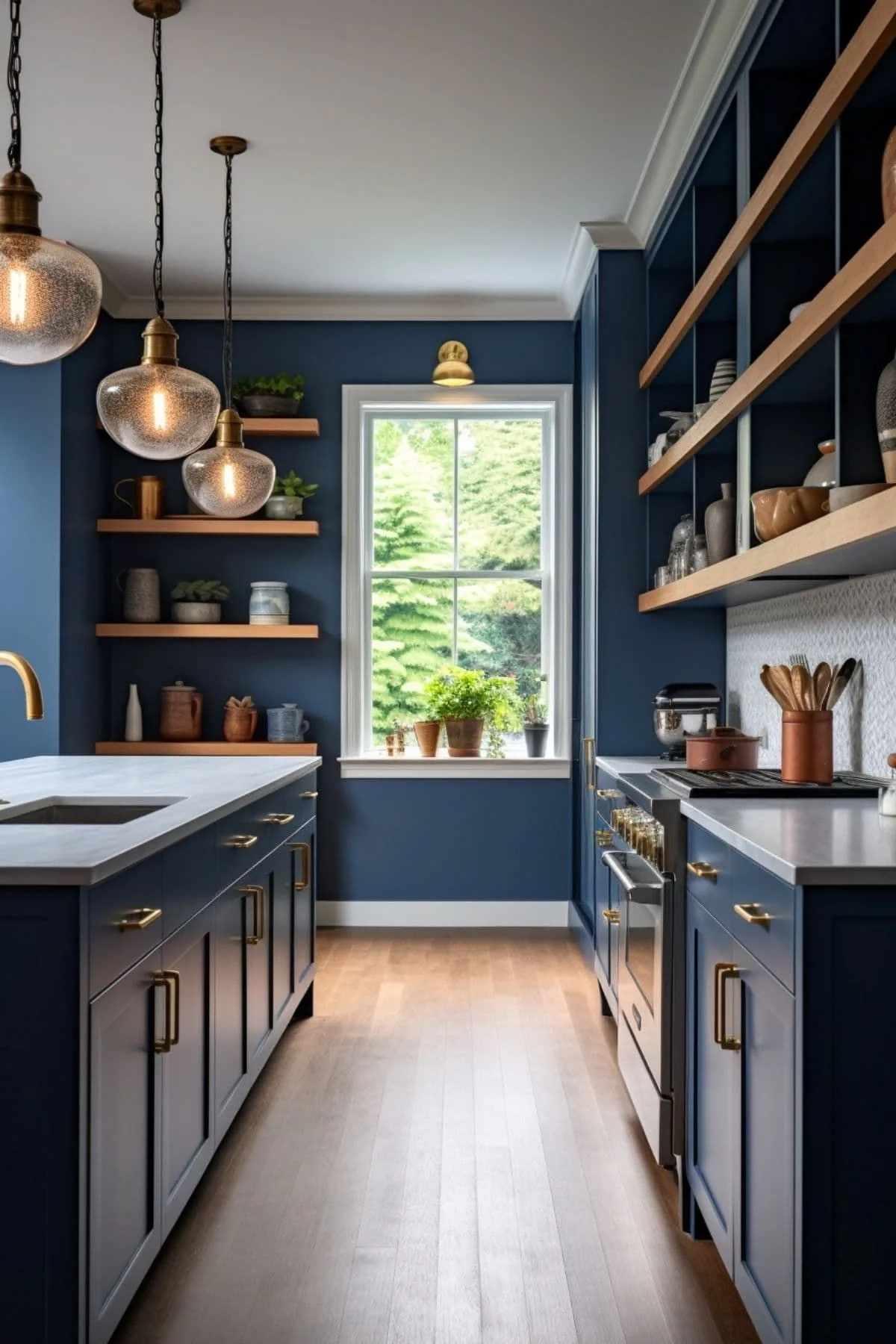
Image source: Web (Bing) / artofit.org (Web image (fair-use with source credit))
What to Pair with Moody Blue: Wood, Textiles, and Metal Finishes
Moody blue is not a one-note look. It comes alive when you bring in the right textures and finishes. Warm metals and natural materials are your best friends here.
They add depth and stop the room from feeling cold.
| Element | Best Options | Why It Works |
|---|---|---|
| Wood | Light oak, walnut, rattan | Light wood lifts the deep blue; walnut adds richness |
| Metal | Unlacquered brass, aged bronze, matte black | Warm metals add glow; matte black keeps it grounded |
| Textiles | Linen, velvet, bouclé, chunky wool | Mixed textures prevent a flat, monotonous wall of color |
| Accent tones | Cream, oatmeal, terracotta | Soft warm shades balance the coolness of blue |
Start with bedding. A white or cream duvet against navy walls gives instant contrast. Swap in a textured throw or velvet pillows for a softer feel.
Then look at your furniture. A light oak nightstand pops against a dark wall. A walnut bed frame melts into it beautifully.
Lighting fixtures count too. A brass sconce or aged bronze lamp adds a warm glow that makes blue feel sophisticated instead of moody. If you want to pull the whole look together, our design journal has plenty of real-room examples for reference.
Layered Lighting: Keeping the Room Moody Without Making It Dark
Dark walls absorb light, so you cannot rely on a single overhead bulb. You need layers. Think ambient light for general visibility, task light for reading, and accent light for detail.
Your first move is swapping bright cool bulbs for warm ones. Look for 2700K to 3000K color temperature. These give off a soft, golden light that flatters blue walls.
Cool white bulbs make dark blue feel flat and slightly sterile.
Add table lamps or wall sconces beside the bed. In our research, photographers and interior stylists recommend placing light sources at different heights to avoid a cave-like shadow. A floor lamp in the corner, a sconce above the headboard, and a small lamp on the dresser create a balanced spread.
Dimmers are also worth the upgrade. They let you drop the light in the evening without flipping the room to black. If you prefer indirect light along the ceiling, our strip light ceiling design guide walks through another way to add a soft glow to a darker palette.
And if you love that vintage feel, a similar cozy depth works in a lighter version too, as you'll see in this softer romantic bedroom take.
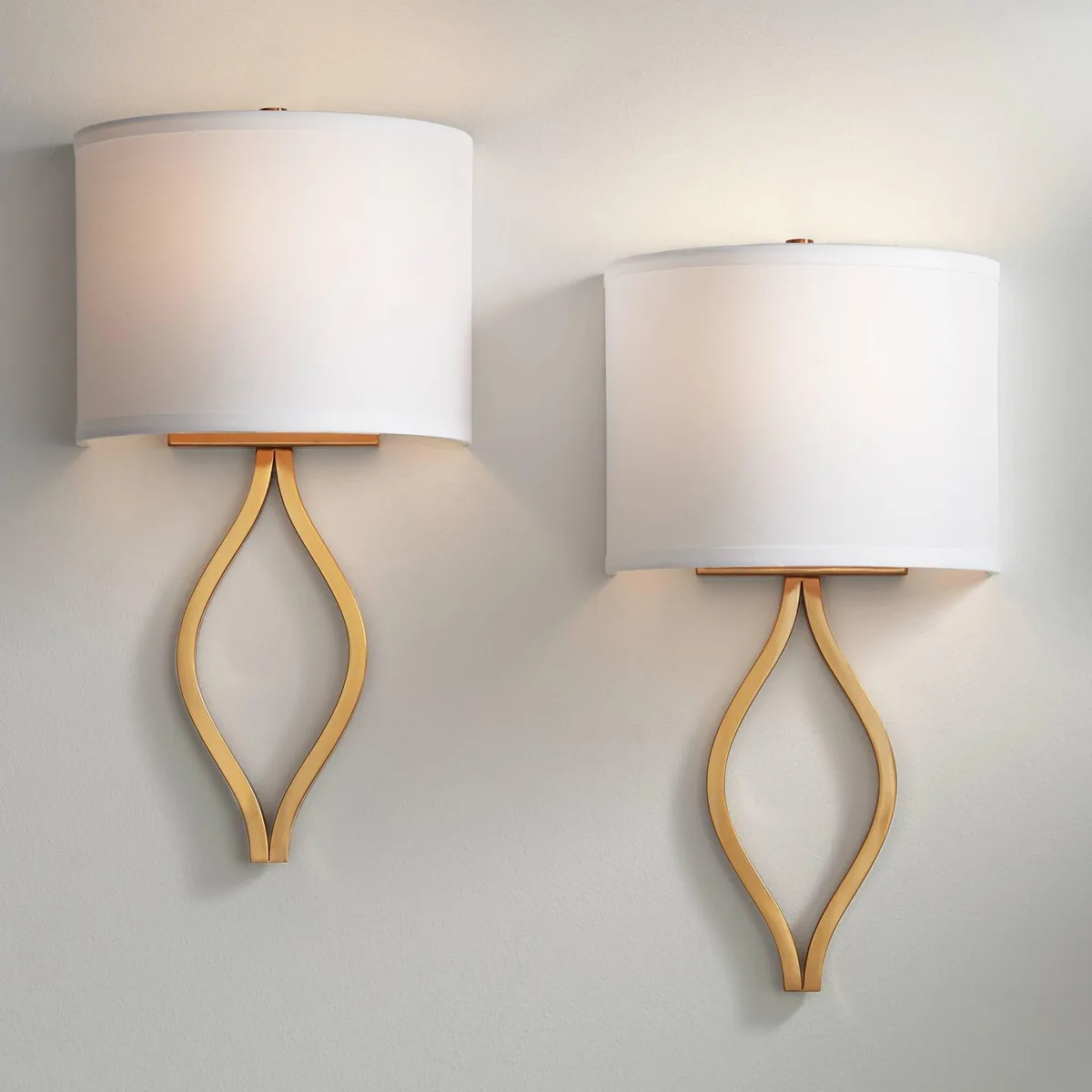
Image source: Web (Bing) / amazon.com (Web image (fair-use with source credit))
Step-by-Step: Prepping, Painting, and Styling a Moody Blue Bedroom
Start with prep, not paint. Deep blue shades hide nothing. Even small dents, nail holes, and patch lines become visible once the color goes on.
Clean the walls first with a damp cloth and mild detergent. Let them dry fully. Fill any holes with spackle, sand them smooth, and wipe away the dust.
If your home was built before 1978, check for lead-based paint before sanding anything. The EPA's Renovation, Repair, and Painting Program has clear guidance on staying safe.
Prepping and Testing Paint
Prime the walls before you paint. A quality primer seals the surface and gives the blue an even base. This matters most if you're covering a lighter color or a glossy finish.
The Painting Order That Saves You Time
Paint the ceiling first, then the walls, then the trim. That way you don't drag a roller over fresh wall paint while reaching up. For color drenching, the order stays the same.
Use a flat or matte finish on walls and a satin finish on trim for a subtle contrast.
Finishing Touches: Bedding, Curtains, and Decor
Let the paint cure for at least 24 hours before hanging anything. Then bring in bedding with a mix of white, cream, and warm neutral tones. Layer in texture with a chunky knit throw or velvet pillows.
Hang panels high and wide so the curtains frame the blue wall instead of covering it.
Common Mistakes That Kill the Mood (and How to Fix Them)
Dark blue rooms go wrong for predictable reasons. The good news is that most fixes are simple.
- Choosing the wrong undertone. If your blue pulls purple but your floors lean warm, the room will clash. Fix it by matching the undertone to your fixed elements before buying paint.
- Relying on a single ceiling light. One overhead bulb leaves corners dark and shadows harsh. Add lamps and sconces at different heights.
- Using cool white bulbs. Anything above 3000K makes blue walls look flat and sterile. Swap them for warm bulbs at 2700K.
- Forgetting to test in real light. Paint store lighting lies. Always test on your actual wall and observe it over a full day.
- Skipping primer. Dark paint over raw drywall soaks in unevenly and needs extra coats. Primer prevents that.
- Making everything match. A blue room with blue bedding and blue accents turns into a blue blob. Break it with cream, wood, or brass.
When you catch a mistake early, you rarely need to repaint the whole room. Adjusting lighting or swapping textiles fixes most issues.
Real-Room Scenarios: Small, Low-Light, and Renter-Friendly Bedrooms
Different rooms need different strategies. Here's how moody blue works in each one.
For small bedrooms, color drenching is your best move. Painting the ceiling and trim the same shade blurs the edges, so the room feels larger and more enveloping. Choose a slightly softer blue.
An ink or slate tone gives depth without swallowing the space.
For low-light bedrooms, embrace the darkness. A windowless or north-facing room can feel cavernous with a medium blue. Go fully dark instead.
Navy or deep teal paired with warm lighting turns the lack of sunlight into an intentional cocoon effect.
For renters, skip the paint entirely if your lease is strict. Use dark blue bedding, a large upholstered headboard, and floor-to-ceiling curtains to create mood without painting. Peel-and-stick wallpaper is another option.
It's removable and won't damage most walls when installed correctly.
If you're working with a compact layout, be mindful of furniture placement. A large dark wall can swallow a small room if every surface stays heavy. One accent wall behind the bed keeps the mood without overwhelming the space.
What It Costs: Paint, Wallpaper, and Lighting Budget
A moody blue bedroom doesn't need to break the bank. Most of the cost depends on how much you paint and what you already own.
| Item | Typical Cost Range | Notes |
|---|---|---|
| Interior paint (gallon) | $40 to $100 | Premium lines cover better and handle washing well |
| Primer | $20 to $50 | One gallon usually covers 300 to 400 sq ft |
| Peel-and-stick wallpaper (roll) | $30 to $90 | Coverage varies by brand, usually ~28 sq ft |
| Blackout curtains (pair) | $30 to $150 | Material and lining drive the price |
| Warm LED bulbs (pack) | $10 to $25 | Look for 2700K to 3000K |
| Wall sconces (pair) | $60 to $300 | Installation adds cost if you hire an electrician |
Most DIY bedrooms run $150 to $400 total. Hiring a professional painter adds roughly $300 to $800 for a mid-sized bedroom. As of 2026, paint prices have inched up slightly, but the gap between premium and budget lines remains narrow enough that quality paint is worth the extra.
Caring for Dark Walls: Cleaning, Touch-Ups, and Wallpaper Maintenance
Dark walls show dust and fingerprints faster than light ones. You'll notice marks within weeks, especially around light switches and door frames.
Clean with a soft microfiber cloth and plain water first. If that doesn't work, use a gentle cleaner designed for painted walls. Avoid abrasive sponges.
They leave visible swirl marks on matte finishes.
For scuffs on painted walls, a Magic Eraser works carefully on satin and semi-gloss finishes. Test it on an inconspicuous spot first. On matte paint, skip it.
The pad can rub off the sheen and leave a patch.
Keep a small amount of leftover paint in a labeled jar for touch-ups. Feather the paint toward the edges so the repair blends in. For peel-and-stick wallpaper, gently wipe with a damp cloth and pat dry.
Avoid soaking the seams, or they'll lift over time.
Dark blue walls don't need heavy maintenance. They just need a light touch and a few minutes of care each month.
Frequently Asked Questions
Can I use moody blue in a small bedroom?
Yes, absolutely. Color drenching works particularly well in small spaces. Painting the walls, ceiling, and trim the same deep blue blurs the visual edges, which makes the room feel larger and more intimate.
Just keep furniture light and lighting warm.
What colors go with navy blue bedroom walls?
Cream, warm white, oatmeal, and soft beige are the safest companions for navy. They create a clean contrast that keeps the blue from feeling heavy. Brass, aged bronze, and light oak add warmth.
Terracotta and dusty pink work as bold accents. Avoid pure white, which can feel stark.
Should I paint the ceiling the same color as the walls?
Yes, if you want a cocoon-like effect. Painting the ceiling the same shade removes visual transitions and makes the room feel enveloping. This technique is called color drenching, and it suits low ceilings especially well.
For a safer look, use a lighter tint of the same shade above. Our painted ceiling feature has more on that.
How do I stop a dark blue bedroom from feeling too dark?
Layer your lighting. Use warm bulbs at 2700K to 3000K and place light sources at different heights. Add table lamps, wall sconces, and a floor lamp instead of one ceiling fixture.
Mirrors across from windows also bounce light around the room.
Is dark blue paint hard to maintain?
Not significantly. Matte finishes show scuffs more easily, so choose satin or eggshell for high-touch areas. Dust with a microfiber cloth.
Clean marks gently with a damp cloth. Keep leftover paint for touch-ups and always test a cleaning solution on an inconspicuous spot first.
Can I paint over old lead paint safely?
Yes, but only with proper precautions. If your home was built before 1978, test the walls for lead paint before sanding or scraping. The EPA requires lead-safe work practices for renovators.
Professional painters trained in lead-safe methods are the safest option for large projects.
Final Verdict: Matching a Moody Blue Bedroom to Your Space
Moody blue bedrooms work best when you commit fully. That means picking the right undertone, planning your lighting, and choosing textures that warm the space. If you can only change one thing, start with the wall color.
It sets the foundation for everything else.
For small rooms, color drenching is a striking and safe choice. For low-light rooms, go darker rather than lighter. For renters, layer textiles and temporary wallpaper instead of paint.
Each path leads to the same calm, enveloping feeling. More full-room transformations live in our bedroom inspiration collection if you want to keep exploring.
Take your time with swatches and lighting tests. The right moody blue isn't just a color. It's the atmosphere you build around it.