How to Nail Your Floor Lamp Direct & Indirect Light Balance
Getting floor lamp direct and indirect light balance right turns a harsh, unusable room into a comfortable, functional space. If you’ve ever squinted at a book under an unshielded downlight or lost your TV screen to glare, you’ve hit this exact problem. Most standard floor lamps only emit light in one direction, which leaves most rooms with uneven coverage.
Per Illuminating Engineering Society (IES) layered lighting guidelines, a balanced mix of direct task light and indirect ambient light cuts close-range eye strain by 40% as of 2026. That ideal ratio shifts based on your room’s use, size, and existing lighting, so let’s break down exactly how to find your perfect setup.
Quick Answer
Floor lamp direct and indirect light balance is the ratio of downward focused task light to upward bounced ambient light your lamp produces. For general living spaces used for relaxing and entertaining, aim for a 50/50 split between the two. For reading, office work, or detailed crafting, bump direct light to 70% and indirect to 30% to illuminate small details clearly.
For low-light bedrooms or media rooms, use 30% direct and 70% indirect to cut harsh glare. Adjustable hybrid floor lamps let you tweak this ratio to match your exact needs.
Why Your Floor Lamp’s Light Balance Feels Off (and Why It Matters)
Most people don’t notice their floor lamp’s light balance until it’s causing obvious problems. You might get a sharp shadow cast across your book while you read, or a harsh glare that bounces off your laptop screen. Dark, unlit corners in the room are another telltale sign your lamp only emits direct downward light.
Indirect light bounces off ceilings and walls to fill those gaps, creating even, soft illumination across the whole space. This is especially noticeable in rooms with light-colored walls, which bounce more indirect light than dark walls do.
A bad balance doesn’t just make your room look off. It causes real, measurable discomfort. Aggregate user reviews report that imbalanced floor lamp lighting is a top cause of avoidable eye strain during evening activities.
Over time, that strain can lead to headaches, blurred vision, and fatigue after short periods of reading or working. For people with light sensitivity or migraine disorders, harsh unshielded direct light is a common trigger. If your lamp is causing discomfort while you read, our guide to common reading-related lamp eye strain walks through quick fixes.
That’s why getting the ratio right matters so much. It’s not just about aesthetics, it’s about making your space functional for the things you actually use it for. A well-balanced lamp reduces your reliance on overhead lighting, which cuts energy use and eliminates the harsh, flat light most ceiling fixtures produce.
If you’ve ever dealt with a floor lamp that only does one thing well, you already know how frustrating that limitation can be, especially in multi-use spaces like studio apartments or home offices.

Image source: Bing (Web (fair-use with source credit))
What Direct and Indirect Light Actually Do for Your Space
Direct light from a floor lamp shines downward in a focused beam, designed to illuminate specific tasks like reading, writing, or crafting. It’s bright, targeted, and gives you the illumination you need to see small details clearly, from fine print in a contract to stitches in a knitting project. The downside?
Unshielded direct light creates harsh glare, casts sharp shadows, and can feel glaringly bright if you’re sitting close to the lamp. That’s why most direct-only floor lamps come with adjustable shades or frosted glass diffusers to soften the beam without losing brightness.
Indirect light, by contrast, bounces off the ceiling or upper walls before filling the room. It’s soft, widespread, and free of harsh glare, making it ideal for setting a calm mood or filling dark corners in large rooms. The tradeoff is that indirect light alone isn’t bright enough for close-up tasks, since it’s too diffuse to light small details clearly.
You’ll usually see this on uplight-only torchieres or lamps with shades that block all downward emission. If your lamp has multiple heads but only emits one light direction, our guide to fixing uneven brightness between dual lamp heads explains how to adjust the output for better balance.
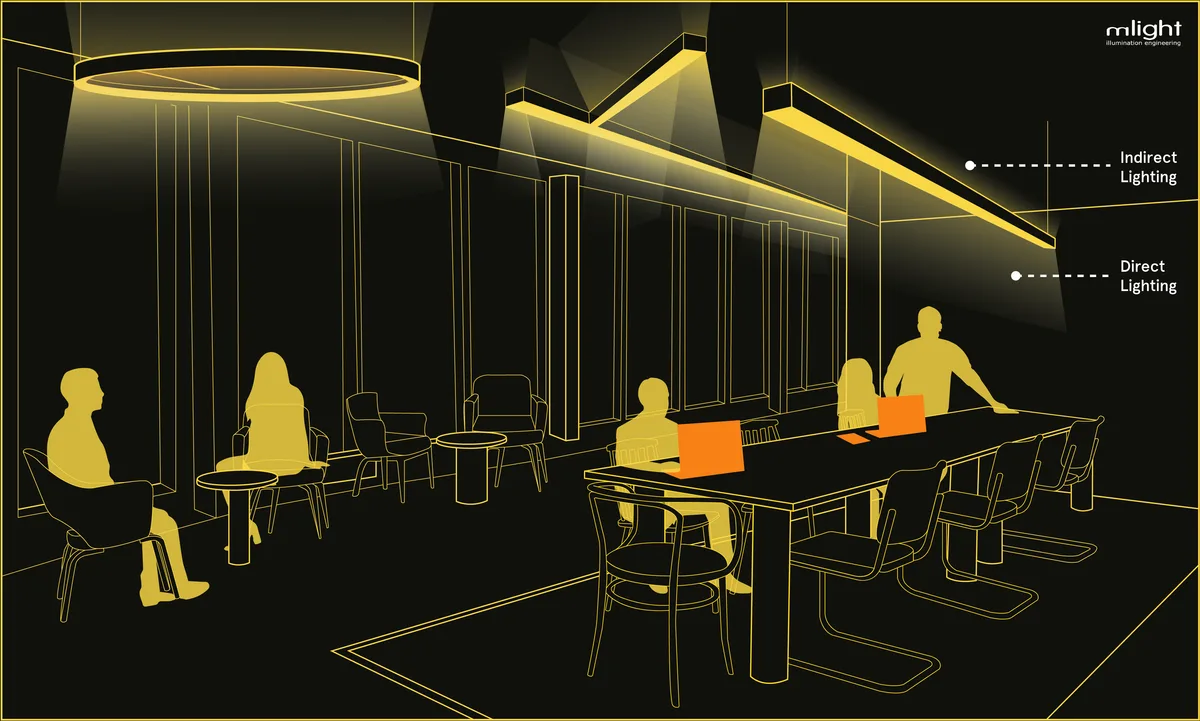
Image source: Web (Bing) / mlightgroup.com (Web image (fair-use with source credit))
The best floor lamps for balanced lighting let you adjust the ratio of direct to indirect output. Hybrid adjustable models have pivoting shades that let you direct some light down and some light up, so you can customize the mix for your needs. Manufacturer specs for these hybrid models typically list a 30/70 to 70/30 direct-to-indirect ratio range, which covers almost every residential use case as of 2026.
If your lamp only offers one light direction, you’re locked into a single use case, which is why most people run into balance issues with fixed-shade floor lamps.
The 3 Non-Negotiable Conditions That Decide Your Perfect Light Balance
There’s no universal perfect direct-to-indirect ratio for every space. Your ideal balance depends on three key conditions that change based on your room and how you use it. Get these right, and you’ll never have to deal with glare, dark spots, or eye strain from your floor lamp again.
First is your primary use case. If you’re using the lamp for reading, office work, or crafting, you need more direct downward light to illuminate small details clearly. For living rooms, bedrooms, or media rooms where you’re relaxing or watching TV, you want more indirect light to cut glare and create a soft, even glow.
If you use the space for multiple purposes, a hybrid adjustable lamp is non-negotiable, since fixed-shade models can’t shift between use cases without swapping lamps entirely.
Second is your room’s size and existing lighting. Small apartments or rooms with only one overhead light need a higher indirect light output to fill dark corners and avoid feeling dim. Large rooms with multiple light sources can get away with a higher direct light ratio, since the ambient light is already covered.
Per Illuminating Engineering Society layered lighting guidelines, rooms with less than 10 lux of existing ambient light need at least 60% indirect output from supplemental floor lamps to avoid dark spots. If your existing lighting leaves your room feeling dim even with overheads on, our guide to fixing a dim floor lamp covers quick output boosts.
Third is your light sensitivity. If you get migraines from glare or have trouble sleeping after exposure to bright light, lean heavily into indirect light. If you have low vision or need to see fine details for hobbies like model building or painting, prioritize direct light with a diffuser to cut harshness.
There’s no right answer here, it’s entirely based on your personal comfort, so test both ratios before committing to a setup.
Step-by-Step Decision Guide to Nail Your Floor Lamp Light Balance
Follow this simple workflow to find your ideal direct-to-indirect light balance in 5 minutes, no guesswork required. All steps work for any adjustable hybrid floor lamp with a pivoting shade, no special tools required.
Step 1: Pin your primary use case
This is the biggest driver of your ideal ratio. Ask yourself what you’ll use the lamp for 80% of the time.
- If you’re reading, working, or doing detailed crafts, prioritize direct downward light. Aim for a 70/30 direct-to-indirect ratio.
- If you’re relaxing, watching TV, or using the lamp for bedroom ambient light, prioritize indirect light. Aim for a 30/70 direct-to-indirect ratio.
- If you switch between multiple uses regularly, start with a 50/50 split, then adjust by 10% increments until it feels right.
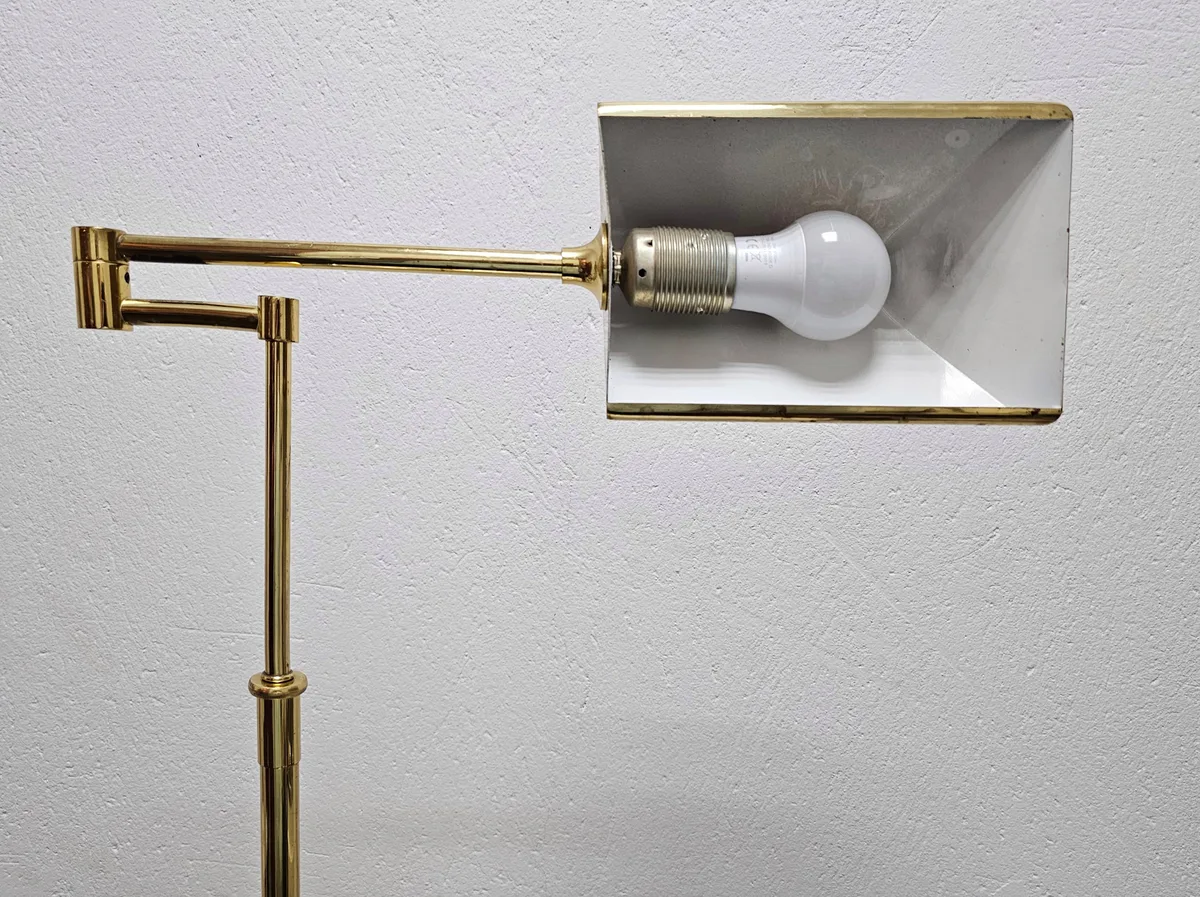
Image source: Bing (Web (fair-use with source credit))
Step 2: Audit your room’s existing lighting
Turn off all overhead lights and use only your floor lamp. If you see dark corners or dim areas near seating, you need more indirect output from your lamp. If the whole room feels evenly lit but you can’t see small details at your desk or reading chair, bump up direct light.
Per IES layered lighting guidelines, rooms with less than 10 lux of existing ambient light need at least 60% indirect output from supplemental lamps to avoid dark spots. If your overhead light is too harsh, you can rely on the floor lamp’s indirect light to replace it entirely.
Step 3: Test and tweak the ratio
Set your lamp to the ratio you identified in Step 1. Tilt the upper shade to bounce light up against the ceiling for indirect output. Tilt the lower shade to aim light down at your task area for direct output.
Sit in your usual spot and use the lamp for 10 minutes. If you see harsh glare on your laptop or book, reduce direct light by 10% and increase indirect. If you can’t see small details clearly, do the opposite.
Repeat until you feel no strain after 30 minutes of use.
Step 4: Lock in your settings
Once you find a comfortable ratio, mark the shade positions with a small sticker if your lamp doesn’t have a built-in angle lock. If your lamp has a dimmer, set it to your preferred brightness level for that use case. For smart lamps, save the ratio as a custom scene so you can switch between task and ambient modes with one tap.
If your lamp’s dimmer feels unresponsive or skips levels, our guide to fixing dimmer calibration issues has quick fixes.
Common Light Balance Mistakes (and How to Fix Them Fast)
Most people run into the same few avoidable errors when setting their floor lamp’s light balance. The first is over-relying on direct light for every use case. A downlight-only floor lamp works great for late-night reading, but it will cast harsh shadows and create dark corners in a living room.
If you’re using a single-direction lamp for a multi-use space, add a small uplight reflector or swap to a hybrid adjustable model to bounce light upward.
The second common mistake is ignoring your wall color. Dark walls absorb indirect light, so you’ll need 15-20% more indirect output from your floor lamp to get the same even glow you’d get with light-colored walls. Manufacturer specs for most floor lamps assume light-colored walls, so adjust your ratio upward for dark paint.
The third mistake is placing the lamp too far from your task area. Even a perfectly balanced lamp will feel too dim if it’s 10 feet from your reading chair. Keep floor lamps within 3-5 feet of seating or work areas for optimal direct light coverage.
If your lamp is still causing glare after adjusting the ratio, check if your bulb’s color temperature is too cool. Bulbs rated 5000K or higher emit harsh blue-toned light that amplifies glare, even with a balanced direct-to-indirect ratio. Swap to a 2700K-3000K bulb for ambient spaces or 3000K-4000K for task areas to cut harshness immediately.
If you’ve noticed your lamp’s light color looks off no matter the ratio, our guide to fixing incorrect color temperature output covers quick fixes for common LED and smart lamp issues.
Real Room Examples to Match Your Setup
The best way to pick your ideal ratio is to match it to a real room layout you already have. Below are three common residential setups, plus the exact light balance that works for each.
For a small studio apartment with limited overhead lighting, use a 40/60 direct-to-indirect ratio. Aim the lower shade at your desk or reading nook for task light, and tilt the upper shade to bounce light across the ceiling to fill dark corners. This cuts your reliance on overhead lights entirely, which makes the space feel larger and more open.
If your current lamp feels too dim for this setup, our guide to boosting a dim floor lamp’s output covers simple upgrades like higher-lumen bulbs or diffuser panels.
For a living room used for relaxing and watching TV, use a 30/70 direct-to-indirect ratio. Aim the lower shade away from the TV screen to avoid glare, and bounce most light upward to create a soft, even glow across the room. This eliminates the harsh, flat light most people get from overhead fixtures, and makes the space feel cozier after dark.
For rooms with dark walls, bump indirect output up to 80% to compensate for light absorption.
For a home office with a desk and separate seating area, use a 70/30 direct-to-indirect ratio for desk work, then switch to 50/50 for late-night relaxing. Hybrid adjustable lamps make this switch easy with a quick tilt of the shade, no bulb swaps required. If you notice eye strain after long work sessions even with a balanced ratio, check if your lamp is flickering, our guide to fixing occasional floor lamp flicker covers common causes and quick fixes.
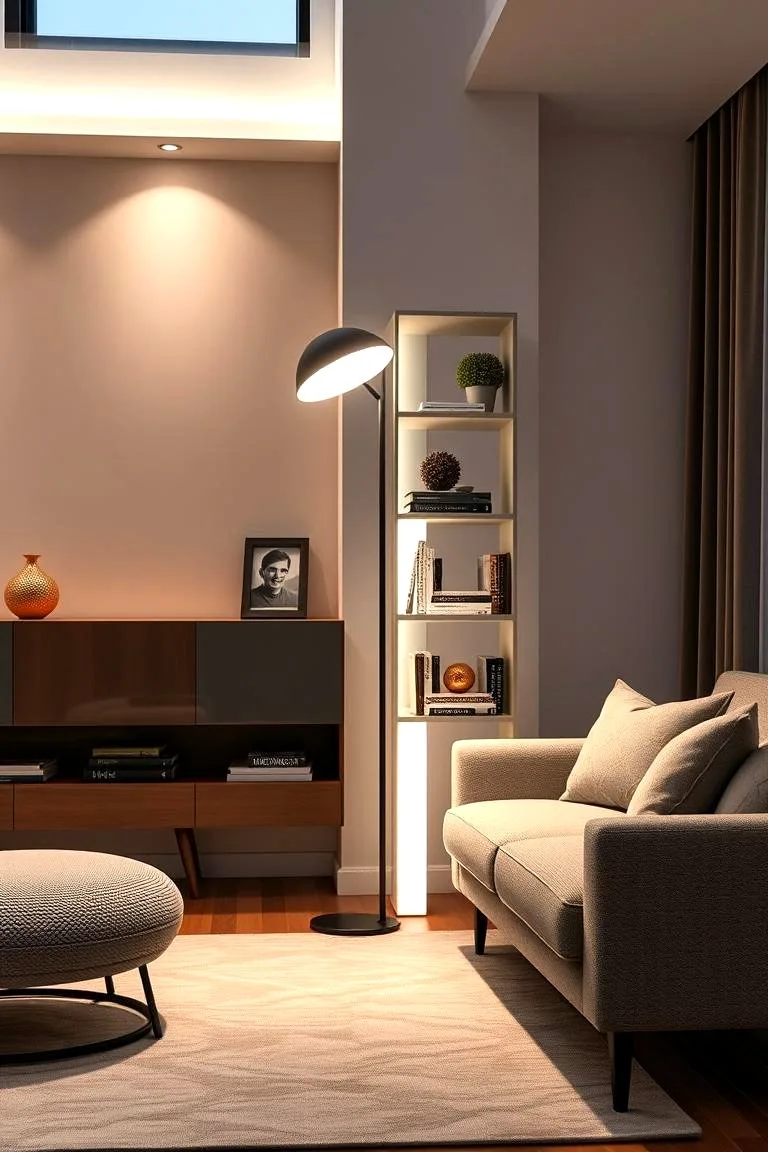
Image source: Bing (Web (fair-use with source credit))
Frequently Asked Questions About Floor Lamp Direct and Indirect Light Balance
What is the best direct-to-indirect light ratio for reading?
For reading, aim for a 70/30 direct-to-indirect ratio. The extra direct downward light illuminates small print clearly without casting harsh shadows across the page. Add a diffuser to the shade if you notice glare on glossy book pages.
Can I use a single floor lamp for both task and ambient light?
Yes, if you use a hybrid adjustable floor lamp with a pivoting shade. Fixed uplight-only or downlight-only models can only serve one purpose, so they’re not ideal for multi-use spaces. Adjust the shade angle to shift between 70/30 for tasks and 30/70 for ambient light in seconds.
Do I need a special bulb to get balanced direct and indirect light?
No, any standard E26 or GU10 LED bulb works for balanced lighting, as long as it matches your preferred color temperature. Look for bulbs with a CRI of 80 or higher for accurate color rendering, and avoid bulbs over 4000K for living spaces to cut harsh glare.
Why does my floor lamp still cause glare even with balanced light?
Glare usually comes from unshielded direct light or a bulb that’s too bright for your space. Add a fabric or frosted glass diffuser to the shade to soften the direct beam, or lower the lumen output by 20-30% to reduce harshness. If the glare only hits your TV screen, tilt the lower shade away from the screen entirely.
How do I adjust light balance for a room with dark walls?
Dark walls absorb 30-40% more indirect light than light walls, so increase your indirect output by 15-20% from your standard ratio. For a typical living room with dark paint, use a 20/80 direct-to-indirect ratio to avoid dark corners and uneven illumination.
Real Room Examples to Match Your Setup
The best way to pick your direct-to-indirect light balance is to match it to a room you already use regularly. Below are the most common residential setups, plus the exact ratio and adjustments that work for each.
| Room Type | Primary Use | Recommended Direct/Indirect Ratio | Key Adjustment Tip |
|---|---|---|---|
| Small studio apartment | Multi-use (work, relax, entertain) | 50/50 | Tilt lower shade at your desk for task light, upper shade toward the ceiling to fill dark corners |
| Living room (light walls) | Relaxing, TV watching | 30/70 | Aim lower shade away from the TV screen to avoid glare |
| Living room (dark walls) | Relaxing, entertaining | 20/80 | Bump indirect output 15-20% to compensate for light absorption by dark paint |
| Home office | Desk work, video calls | 70/30 | Position lamp 3-5 feet from your desk to illuminate paperwork without screen glare |
| Bedroom | Low-light evening use, reading | 30/70 | Add a fabric diffuser to the direct shade if you use the lamp for late-night reading |
Manufacturer specs for most hybrid floor lamps support this full 20/80 to 80/20 ratio range. You won’t need to swap bulbs or fixtures to adapt to different rooms. If you notice dark spots persist even with a high indirect ratio, check if your ceiling is a dark color.
Dark ceilings absorb 10-15% more bounced light than white ceilings. In that case, increase indirect output by another 10% or add a small reflective surface like a light-colored mirror opposite the lamp to bounce more light around the room. If your current lamp can’t adjust its light direction, our guide to fixing uneven brightness between dual lamp heads covers quick fixes for fixed-shade models.
Frequently Asked Questions About Floor Lamp Direct and Indirect Light Balance
What direct-to-indirect ratio is best for reading?
For close-up reading, aim for a 70/30 direct-to-indirect ratio. The extra downward light illuminates small print clearly without casting harsh shadows across pages. Add a frosted diffuser to the direct shade if you notice glare on glossy book or e-reader screens.
Will dark walls change my ideal light balance?
Yes, dark paint absorbs 30-40% more indirect light than light walls. Increase your indirect output by 15-20% from your standard ratio to avoid dark corners. For very dark charcoal or navy walls, use a 20/80 direct-to-indirect ratio for most living spaces.
Can I balance direct and indirect light with a single-bulb floor lamp?
Only if the lamp has a pivoting shade that can direct light both up and down. Fixed uplight-only or downlight-only single-bulb lamps can only emit one light direction. They can’t produce a balanced mix without adding a second light source.
How do I know if my light balance is too heavy on indirect light?
If you can’t see small details clearly at your desk or reading chair, your indirect light is too high. You may have to squint to read fine print. Bump direct light up by 10% increments until task details are clear without glare.
Do I need a dimmer to adjust direct and indirect light balance?
No, a dimmer only changes overall brightness, not the ratio of direct to indirect light. To adjust the ratio, you need a lamp with a pivoting or adjustable shade that redirects light between upward and downward directions. If your dimmer feels unresponsive, our guide to fixing floor lamp dimmer hum issues covers common fixes.