Modern Black Wall Painting Design Ideas for a Bold, Sophisticated Home Look
So, you’re thinking about a modern black wall painting design. It’s a bold move that instantly adds drama, sophistication, and a serious style anchor to any room. The trick is making sure that boldness works for your space, not against it.
Done right, a black wall is a stunning statement. Done poorly, it can feel like a dark, unfinished mistake.
The key difference lies in the details you can’t see on a tiny paint chip. Black paint isn’t just black, it has underlying color tones called undertones that are everything. For a truly rich, modern look, you also need to understand a paint’s Light Reflectance Value, or LRV.
As of 2026, premium black paints typically have an LRV between 3 and 5, meaning they reflect back almost no light. That’s why your prep and application have to be flawless. Let’s break down exactly how to get that flawless finish, starting with the most crucial choice.
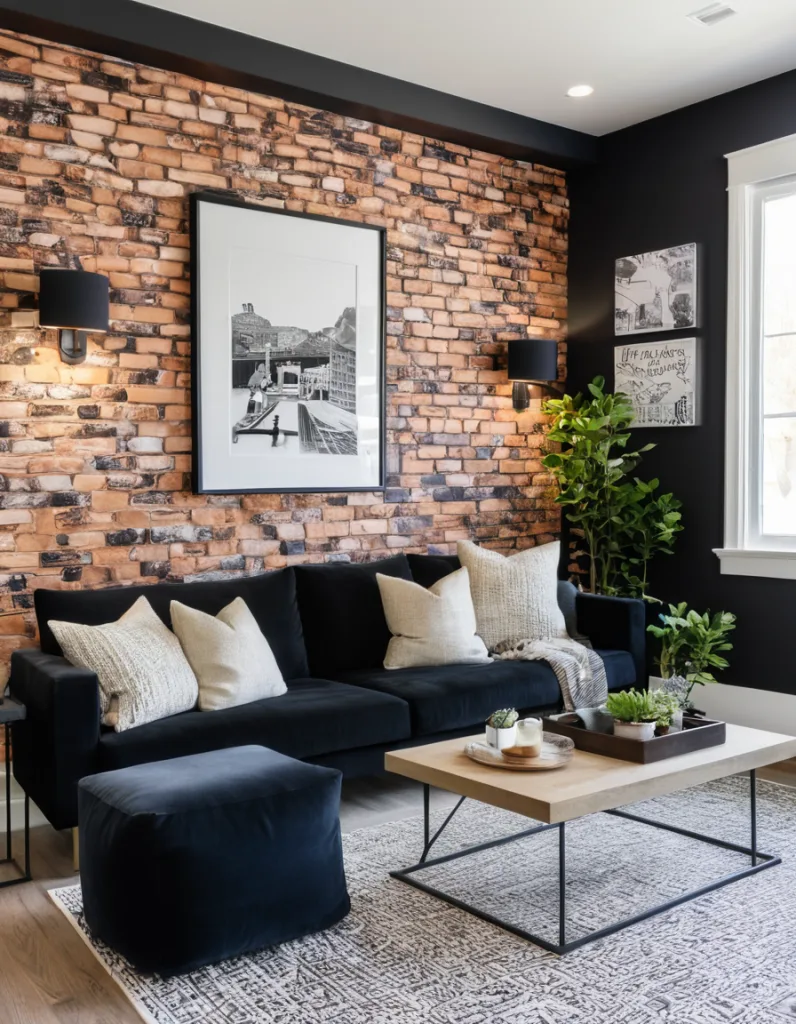
Image source: Bing (Web (fair-use with source credit))
Quick Answer
Modern black wall painting design relies on color undertone, correct sheen, and perfect application. Choose a black with a subtle blue or charcoal undertone for a crisp, modern feel. Use a gray-tinted primer for the best coverage.
Apply at least two coats with quality brushes and rollers. Balance the dark wall with layered lighting and contrasting textures for a sophisticated look.
Why a Black Wall Is Different From Any Other Color
Painting a wall black is a completely different beast from painting it white or beige. It’s not just a color swap. Black paint has almost no light reflectance, which fundamentally changes how it interacts with your space, your lighting, and the surface it’s applied to.
Think of it like wearing a black shirt versus a white one. Every little flaw, piece of lint, or wrinkle is visible. On your wall, that means any imperfection in the drywall, every uneven roller stroke, and every patch of inadequate primer will show up.
The paint itself is also less forgiving. Cheaper black paint often lacks the pigment density to achieve a true, deep black, resulting in a muddy, purplish, or streaky finish that requires four or five coats.
The psychological and visual impact is massive, too. A black wall doesn’t recede, it advances. It creates an immediate focal point and demands that everything around it be intentionally considered.
This is why it works so well in a moody boho bedroom design, where the dark backdrop makes textiles and natural materials pop. It’s a commitment, but when executed with knowledge, the payoff is a room that feels curated, dramatic, and incredibly modern.
Your Single Most Important Decision: It’s All in the Undertone
Forget the idea of a “true” black. Every black paint has an undertone, a subtle secondary color that comes through under different lighting conditions. This is your single most important choice, because the wrong undertone can make your sleek modern wall look dingy, outdated, or just plain off.
The three main undertone families you’ll encounter are:
- Blue/Cool Undertones: These blacks (like Farrow & Ball’s “Railings” or Sherwin-Williams “Tricorn Black”) read as crisp, modern, and slightly graphic. They pair beautifully with cool metals like stainless steel, chrome, and silver, and work in rooms with lots of natural north light.
- Brown/Warm Undertones: These blacks lean chocolatey or charcoal grey. They feel softer, more organic, and cozier than a blue-black. They’re excellent for creating an intimate, enveloping feel and work well with warm woods, brass, and gold accents.
- Green Undertones: Less common, but some deep blacks have a green base. These can feel very rich and historical, but in a modern context, they risk making a room feel murky if not balanced correctly.
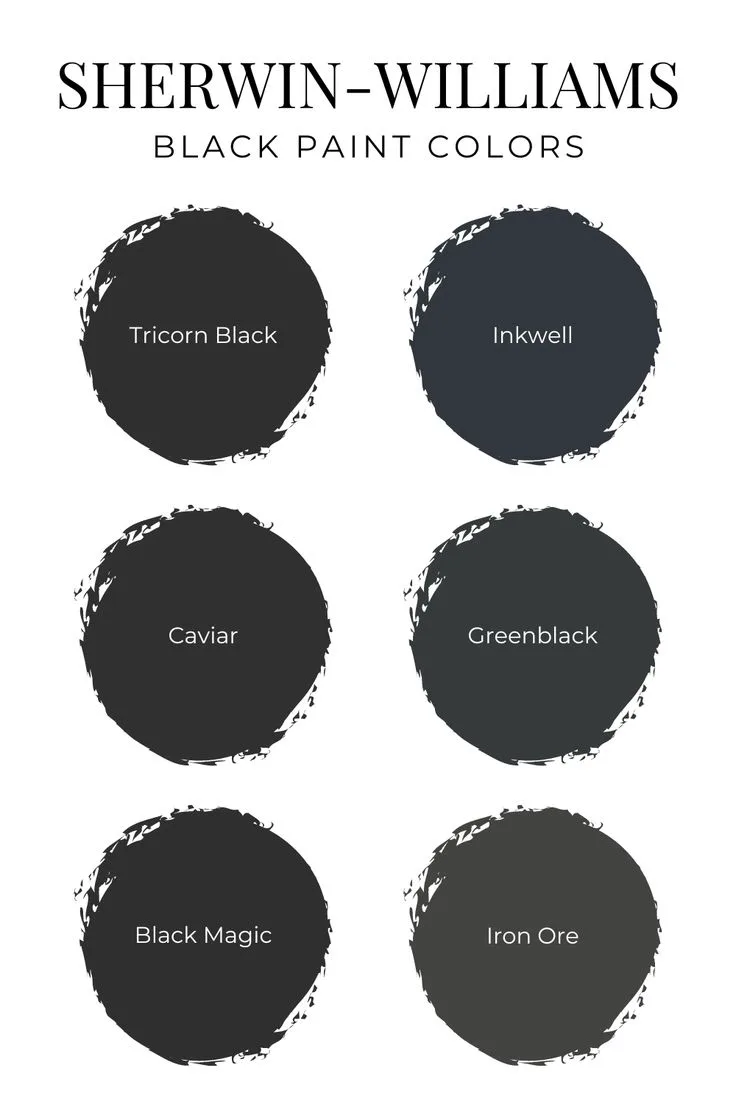
Image source: Bing (Web (fair-use with source credit))
How to Read a Black Paint Chip
Don’t judge a black paint by the chip alone. A tiny square surrounded by white makes every black look stark and similar. Instead, look at the paint brand’s fan deck.
Find the column of colors your black belongs to. The colors directly above it (the lighter tints) will reveal its true undertone. If the lighter shades are greys and blues, you have a blue-black.
If they are taupes and beiges, you have a brown-black.
The Lighting Test You Cannot Skip
You must sample your top two or three choices on the actual wall you plan to paint. Paint at least a 2′ x 2′ square. Then, observe it over 48 hours.
- Look at it in the bright morning light.
- Look at it in the harsh afternoon sun.
- Look at it at night with your room’s artificial lights on.
The color will shift dramatically. A blue-black might look icy in daylight but inky and neutral at night. A brown-black might look rich and warm under a lamp but flat and dirty during the day.
The goal is to pick the black that looks best in the light you use the room in most often. This step alone prevents the most common regret in dark paint projects.
Choosing the Right Sheen: From Moody Matte to Daring Gloss
The sheen, or finish, of your paint controls its reflectivity and durability. With black, this choice is intensely visual and directly impacts the final mood.
| Sheen | Look & Feel | Best For | Considerations |
|---|---|---|---|
| Matte/Flat | Non-reflective, velvety, deeply absorbs light. Hides wall imperfections best. | Bedrooms, media rooms, ceilings. Creates a soft, modern, “chalkboard” effect. | Least durable. Difficult to clean. Touching up can show. |
| Eggshell | Very low luster, like a chicken’s egg. Slight reflectivity. | Living rooms, dining rooms, hallways. A practical, modern standard. | More durable than matte. Shows fewer application flaws than satin. |
| Satin | A soft glow, pearl-like. Reflects more light. | Trim, doors, kitchens, bathrooms. Makes black feel richer. | Shows every wall imperfection and roller stroke. Use only on perfect surfaces. |
| Semi/High-Gloss | Mirror-like, reflective, ultra-modern. | Trim, cabinets, furniture, statement walls. Creates a lacquered, dramatic effect. | Shows every single flaw. Requires impeccable prep and professional-level application. |
For most modern black accent walls, a matte or eggshell finish is the safest and most sophisticated bet. It gives you that deep, moody, light-absorbing quality without the distraction of shine. If you’re painting millwork or trim black, like in a modern barndominium design, stepping up to a satin or semi-gloss on those elements can add fantastic contrast and depth against a matte wall.
Reserve high-gloss for when you want a hyper-modern, daring statement and have a perfectly smooth surface to work with.
The Secret to a Perfect Finish: Wall Prep and Primer
This is where the pros separate their work from a DIY disaster. Skipping or skimping here guarantees a subpar result with black paint. The goal is to create a perfectly uniform, neutral base for that rich pigment to adhere to.
First, repair your walls. Fill any nail holes, dings, or cracks with spackle. Sand everything smooth until you can run your hand over the wall and feel no transitions.
Any ridge will cast a tiny shadow that black paint will exaggerate. Wipe down the walls with a damp cloth to remove all dust.
Now, primer. Never use white primer under black paint. You’ll be fighting for coverage forever.
You must use a gray-tinted primer. This is non-negotiable. The gray dramatically reduces the number of topcoats needed (from 4+ down to 2) and ensures a consistent, deep final color.
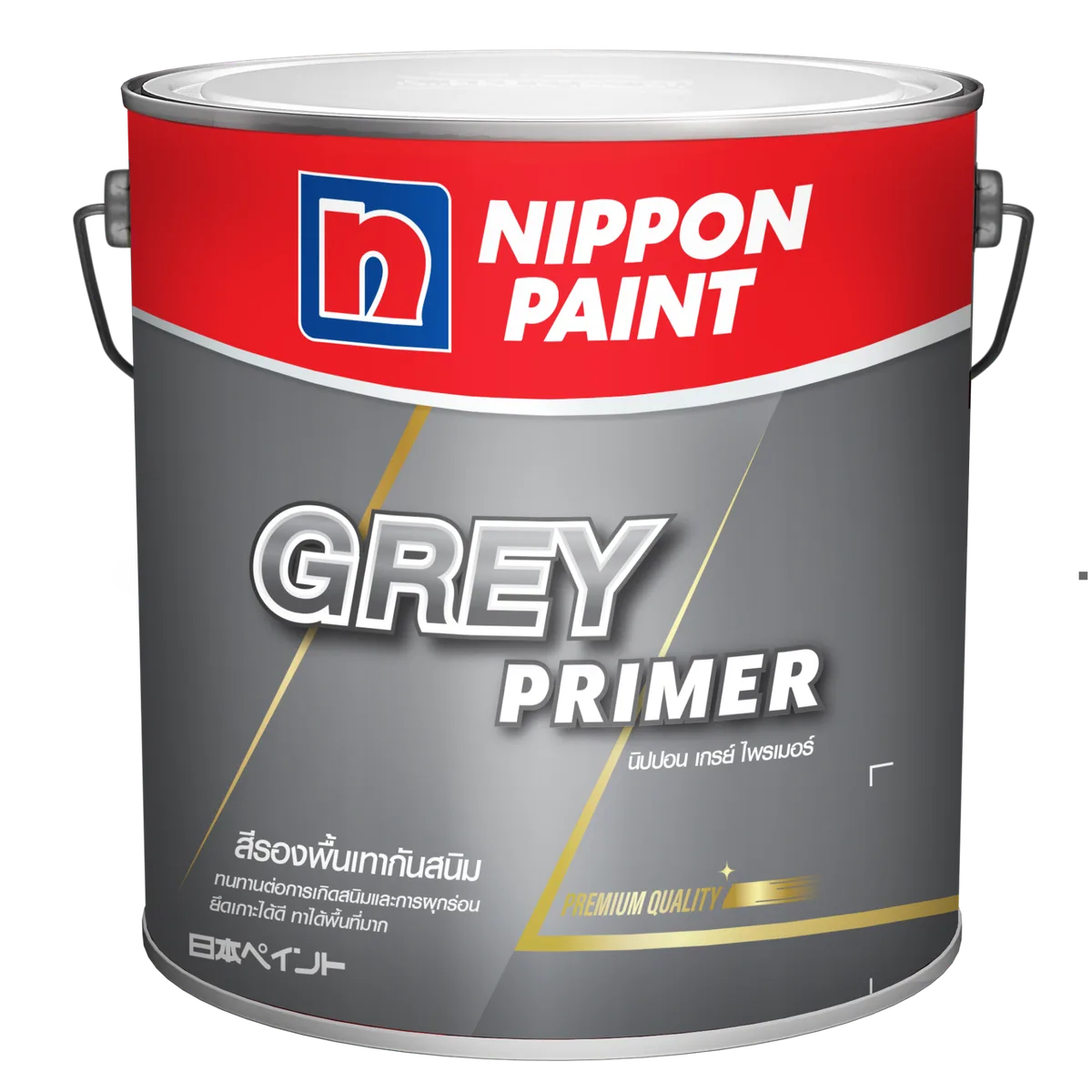
Image source: Bing (Web (fair-use with source credit))
The Right Way to Use Gray-Tinted Primer
You have two main options:
- Dedicated Tinted Primer: Go to your paint store and have them tint a can of high-quality primer (like Kilz or Zinsser) to a medium gray. This is the best method.
- Self-Mixed Primer: If you’re in a pinch, you can mix about 10% of your black paint into a white primer to create a gray base. It’s not as good as a professionally tinted product, but it’s better than white.
Apply the gray primer just as carefully as you will the topcoat. Use a roller with a 3/8″ nap for smooth walls. Let it dry completely according to the manufacturer’s specs, usually at least 2-4 hours.
Once primed, your wall should look like a uniform light-to-medium gray. If you see any streaks or missed spots, you’ll see them ten times worse under the black paint, so do a second coat if needed.
Application Masterclass: Getting That Rich, Even Color
With perfect prep done, you’re ready for the satisfying part. Black paint application is all about patience, good tools, and maintaining a “wet edge” to avoid lap marks.
Tools You Must Have:
- High-quality angled sash brush (2″ or 2.5″) for cutting in.
- High-quality roller frame and handle extension.
- Roller covers with a 3/8″ nap for smooth walls, 1/2″ for slightly textured.
- A paint tray and liner.
- Painter’s tape (FrogTape is best for sharp lines).
- Drop cloths.
Step-by-Step Process:
- Cut In First: Using your angled brush, carefully paint a 2-3 inch border along the ceiling, corners, and trim. Do not try to roll right up to the edges. Take your time here for crisp lines.
- Load the Roller Properly: Dip your roller into the paint tray well. Roll it back and forth on the tray’s ramp until it’s evenly loaded and not dripping. A saturated, even roller is key.
- Apply in a “W” Pattern: On the main wall area, apply the paint in a large “W” shape without lifting the roller. Then, fill in that shape with horizontal or vertical strokes, without going back over areas that are starting to dry.
- Maintain a Wet Edge: Always work from a dry area back into a wet edge of paint. This blends the new paint with the still-wet paint, preventing visible seams and stripes.
- Let the First Coat Dry Fully: Black paint can feel dry to the touch quickly, but it needs the full recoat time listed on the can (often 2-4 hours) to set properly. A second coat applied too soon can pull up the first.
- Apply the Second Coat: Repeat the entire process. A proper second coat is what delivers the depth and uniformity. Don’t press too hard with the roller; let the tool do the work.
- Inspect Under Different Lights: After the second coat is dry, turn on all the room’s lights and use a flashlight at a raking angle. This will reveal any thin spots or missed areas that need a touch-up.
A professional tip is to slightly thin the first coat of paint with a few ounces of water (check your paint can for guidelines). This helps it level better and absorb into the primed surface. The second coat should be used straight from the can for maximum pigment and film build.
This two-coat system, over a gray primer, is the gold standard for a perfect black wall.
Remember, black is a powerful tool in design. It can define a space in an open-concept layout or create a stunning backdrop for art, much like the principles used in creating a gallery wall on black paint. The key is to control the undertone, master the sheen, and execute the application with precision.
The result is a timeless, modern feature that transforms the feel of your entire room.
Where Black Walls Work (and Where They Shine)
Black walls are incredibly versatile, but they perform best in specific scenarios. The goal is to leverage their strengths, drama and focal power, while mitigating the main risk, making a room feel closed in.
They are perfect for defining zones in open-plan spaces. A black wall behind a sofa or dining set instantly creates a visual anchor. It tells the eye where one “room” ends and another begins without any physical barrier.
Powder rooms and home offices are also prime candidates. These are smaller, enclosed spaces where you can embrace the cozy, intimate feel. A black wall here adds luxury and depth, making the room feel like a designed experience rather than just a functional box.
Room-by-Room Breakdown
- Living Room: An accent wall behind the television or media console is a classic. It helps the screen blend in when off and makes your shelving or art pop. This works beautifully in spaces with high ceilings or abundant natural light to balance the darkness.
- Bedroom: Paint the wall behind your headboard. This creates a cocooning, luxurious backdrop that makes your bed the undisputed focal point. It’s a cornerstone of moody bedroom decor schemes.
- Dining Room: A black wall in a dining room adds instant formality and drama. It makes a gathering feel more intentional and memorable. Pair it with a striking light fixture over the table.
- Entryway/Foyer: A bold first impression. A black wall in an entry sets a sophisticated tone for the entire home. It’s a great place to go bold if you’re hesitant about committing to a larger living space.
- Home Office/Study: Enhances concentration by reducing visual clutter. It makes books, framed degrees, and decor stand out with authority.
Avoid black in rooms with very low natural light and no opportunity for layered artificial lighting. Also, think twice in very small, windowless bathrooms where the goal is usually to feel bright and airy, not like a cozy cave.
Balancing the Darkness: Light, Texture, and Contrast
A successful black wall doesn’t stand alone. It’s part of a conversation with everything else in the room. If you don’t balance it, the space can feel heavy or flat.
The counterweights are light, texture, and deliberate contrast.
Lighting is your number one tool. You need layers of it. Ambient lighting (overhead), task lighting (lamps), and accent lighting (sconces, picture lights) are all essential.
Warm white bulbs (2700K-3000K) are best. They make the black feel rich and inviting, not cold and sterile. Place lamps opposite the black wall to bounce light back into the room.
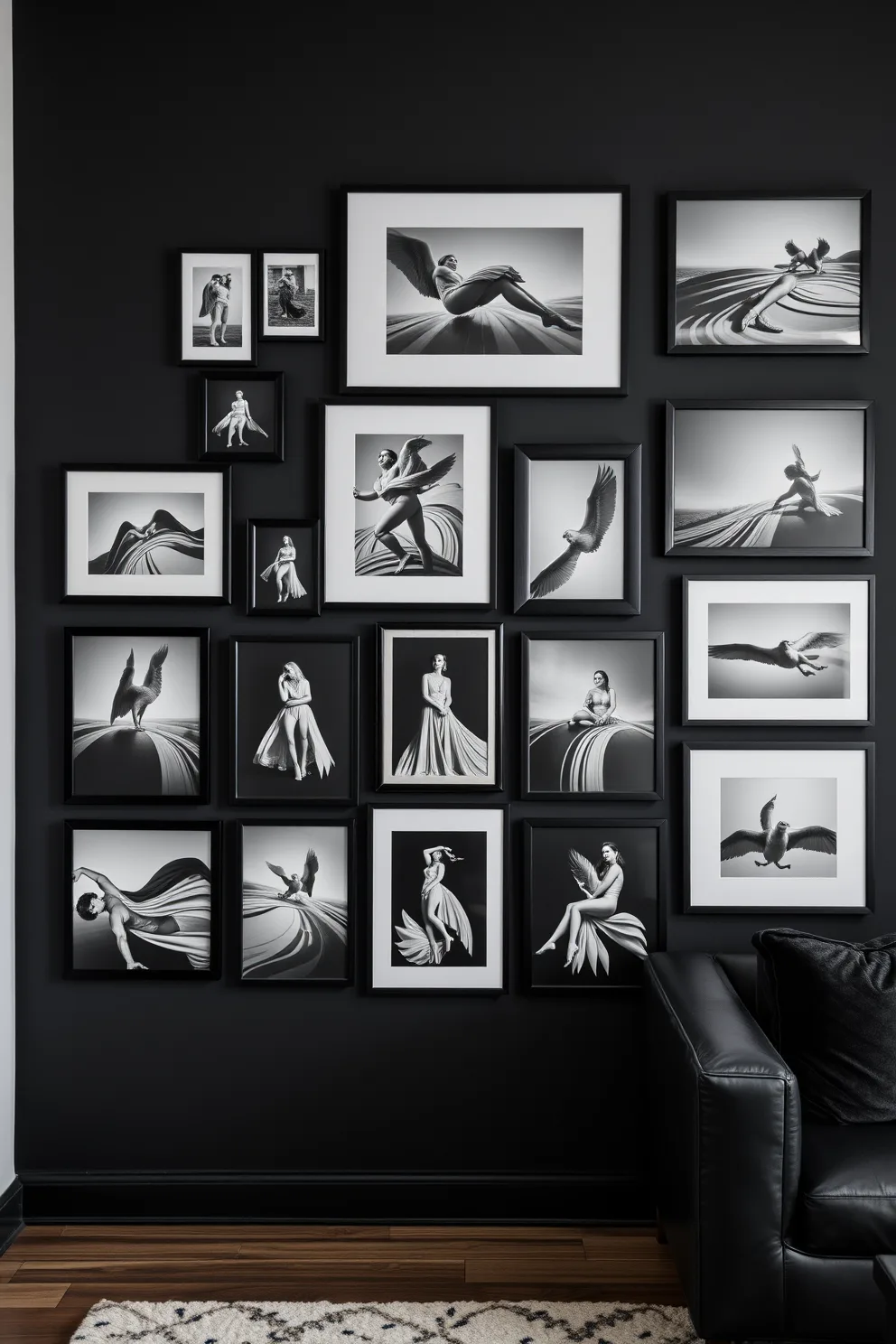
Image source: Bing (Web (fair-use with source credit))
Texture breaks up the monolithic feel of a large dark plane. Think about what’s against or near the wall.
- A large woven rug.
- A velvet sofa.
- Raw wood furniture or floating shelves.
- A gallery wall with a mix of framed art, mirrors, and maybe some three-dimensional objects.
- Linen curtains or a large leafy plant.
Contrast is about introducing light and color to play against the dark backdrop. This is where your other walls, ceiling, and trim come in. Painting the other walls a crisp white or a very light neutral is the most common and effective strategy.
It contains the drama and keeps the room feeling open.
For a more advanced look, consider painting the trim and doors a contrasting semi-gloss white. Or, try a moody blue bedroom approach where the black wall is paired with other deep, saturated colors on adjacent walls for a fully enveloping feel. The black then acts as the anchor in a rich palette.
Common Visual Pitfalls (And How to Dodge Them)
Even with the right color and good application, a black wall can feel “off” if you fall into common design traps. These mistakes are about the context, not the paint job itself.
Pitfall 1: The Isolated Accent Wall. A single black wall floating in a sea of beige with no other dark elements in the room looks random and unfinished. It needs to be tied into the space.
- Fix: Repeat the black in smaller doses elsewhere. Use black picture frames, a black lamp base, black hardware on furniture, or a black throw pillow. This creates visual rhythm.
Pitfall 2: Ignoring the Fifth Wall. The ceiling is a huge, often forgotten surface. A stark white ceiling above a black wall can create a harsh, lid-like line that visually lowers the space.
- Fix: Consider painting the ceiling a lighter shade of the wall color or a soft, warm gray. Even a slightly off-white can soften that transition. For true drama, a black ceiling can be stunning in a room with high enough ceilings.
Pitfall 3: Too Little Contrast or Texture. A room with a black wall, a black leather sofa, and a grey rug will feel flat and lifeless. You need visual interest.
- Fix: Intentionally layer in light woods, brushed brass or chrome, creamy textiles, and organic materials like rattan or stone. A mix of matte and shiny finishes also adds depth.
Pitfall 4: Wrong-Scale Furniture. Pushing a small, low-profile sofa against a massive black wall will make both look awkward. The wall needs furniture that can hold its own visually.
- Fix: Choose substantial pieces. A large sectional, a tall bookshelf, or a grand piece of art helps the wall feel integrated and proportional.
When Black Walls Fail: Real Photo Examples
While we can’t show photos, you can look for these tells in online images. A failed black wall often makes the room look smaller and darker in an unflattering way. The color might look purple or brown under the room’s lighting.
You might see visible roller marks or patchiness where the primer failed.
Often, the furniture looks lost or slapped against the wall without any intentional styling. The space lacks the layered lighting and contrasting textures that make a black wall sing. Learning to spot these issues in photos is great training for planning your own successful project.
Cost Breakdown: What You’ll Really Pay
Painting a wall black isn’t inherently more expensive than any other color, but the margin for error is smaller. Skimping on materials almost guarantees a poor result, so budget for quality.
Materials (for one 12′ x 8′ accent wall, ~96 sq ft):
- Premium Black Paint (1 Gallon): $70, $100+. Brands like Benjamin Moore, Sherwin-Williams, or Farrow & Ball have superior pigment. One gallon covers 350-400 sq ft, so you’ll have plenty for two coats on one wall and for touch-ups.
- Gray-Tinted Primer (1 Quart): $20, $30.
- High-Quality Brushes & Rollers: $25, $40. Don’t use the $2 throwaways. Good tools hold more paint and apply it more evenly.
- Painter’s Tape, Drop Cloths, etc.: $15, $20.
- Wall Repair Supplies (spackle, sandpaper): $10, $15.
Total DIY Materials Estimate: $140, $205.
Professional Labor Cost: If you hire out, costs vary by region. For a single accent wall with proper prep, expect a range of $200 to $500 for labor on top of materials. The complexity comes from the detailed prep and multiple coats.
A pro ensures a flawless finish but adds significant cost.
The biggest potential hidden cost is in extra paint if you use a poor-quality product. A cheap black might need 4 coats over white primer, effectively doubling your paint cost and labor time. Investing in good paint and primer from the start is the most cost-effective path.
Should You DIY or Hire a Pro? A Realistic Comparison
This decision hinges on your comfort with detailed prep, your patience for perfection, and the condition of your walls.
DIY is for you if:
- Your walls are in very good condition with minimal repairs needed.
- You are meticulous, patient, and willing to follow the multi-step process (clean, repair, sand, prime, two coats).
- You’re confident cutting in straight lines or are using high-quality painter’s tape.
- The project is a weekend accent wall, not an entire room with ceilings and trim.
- Budget is a primary concern.
Hire a Pro if:
- Your walls have significant imperfections, old textures, or you’re changing from a very dark color.
- The project involves high ceilings, complex trim, or you’re painting an entire room.
- You want a specialty finish like high-gloss, which is extremely difficult to apply flawlessly.
- You have limited time or simply don’t enjoy this type of work.
- You can’t risk a learning-curve mistake on a prominent wall in your home.
A professional brings speed, guaranteed smoothness, and the right tools for tricky areas. They also handle the mess and cleanup. For many, the assurance of a perfect finish is worth the investment, especially for a bold choice like black where any flaw is visible.
Our research into contractor feedback shows that black and other dark colors are among the most common DIY projects they are later hired to fix. The issues are almost always inadequate surface prep and poor application technique leading to streaks and uneven color. If you DIY, commit to doing the prep and primer steps perfectly.
Black Wall Alternatives: When Paint Isn’t the Answer
Paint is the most common route, but it’s not your only option. Some alternatives offer different textures, patterns, or levels of commitment.
Black wallpaper provides instant pattern and depth. A textured grasscloth or a geometric print adds a layer of interest paint can’t match. Modern peel-and-stick versions are great for renters or commitment-phobes.
They allow for bold patterns without permanent change.
Black wall panels like shiplap or board and batten add architectural dimension. This approach creates shadows and lines that break up the wall. It’s a more labor-intensive installation, but the result is a permanent, high-impact feature.
For a less intense look, consider a very dark charcoal or navy. These near-blacks add depth without the full dramatic weight. They can be easier to live with in sun-drenched rooms where a true black might feel too stark.
Expert Tips for Maintenance and Touch-Ups
Matte black walls show scuffs and marks more than other finishes. Keep a small amount of the original paint for touch-ups. Always touch up the entire vertical section from corner to corner or ceiling to floor to avoid a visible spot.
Blending a small patch on a matte finish is very difficult.
Dust and clean gently. Use a soft, microfiber duster. For smudges, a barely damp magic eraser can work, but test in an inconspicuous area first.
Harsh cleaners or scrubbing can damage the paint’s sheen.
Your Final Checklist Before You Start Painting
Run through this list to ensure you’re ready.
- Undertone tested on the wall at different times of day.
- Sheen selected (matte/eggshell recommended).
- Gray-tinted primer purchased.
- High-quality brushes and rollers on hand.
- Walls cleaned, repaired, and sanded smooth.
- Painter’s tape applied for crisp edges.
- Furniture moved and floors protected with drop cloths.
- Lighting plan considered for the finished room.
Frequently Asked Questions
Does black paint make a room look smaller?
It can, but it’s not a rule. A single black accent wall can actually recede, adding depth. The key is balancing it with light colors on other surfaces and ample layered lighting.
How many coats of black paint are needed?
With a gray-tinted primer, plan for two full topcoats. Without proper primer, you may need three or even four coats for full, even coverage.
Is black paint hard to cover up later?
Yes. Painting over black requires a high-hide primer, often tinted gray or white. It typically takes two coats of primer plus two coats of the new color to completely conceal the black.
What is the best black paint for walls?
Look for brands known for rich pigments. Benjamin Moore “Onyx”, Sherwin-Williams “Tricorn Black”, and Farrow & Ball “Railings” are consistently top-rated by professionals for their depth and true black quality.
Can I use black in a room with no natural light?
You can, but your artificial lighting plan becomes critical. You’ll need multiple warm light sources to prevent the room from feeling like a cave. Consider a glossy sheen to reflect more light.
Should I paint the trim black too?
Black trim against a black wall creates a seamless, modern look called color drenching. For definition, keep the trim a contrasting semi-gloss white. Both are valid modern choices.